Who
Who was Pilate? The Tyndale Open Study Notes on Mark 15:1 say that Pilate was the Roman governor of Judea.
Source: Tyndale Open Study Notes · CC BY-SA 4.0
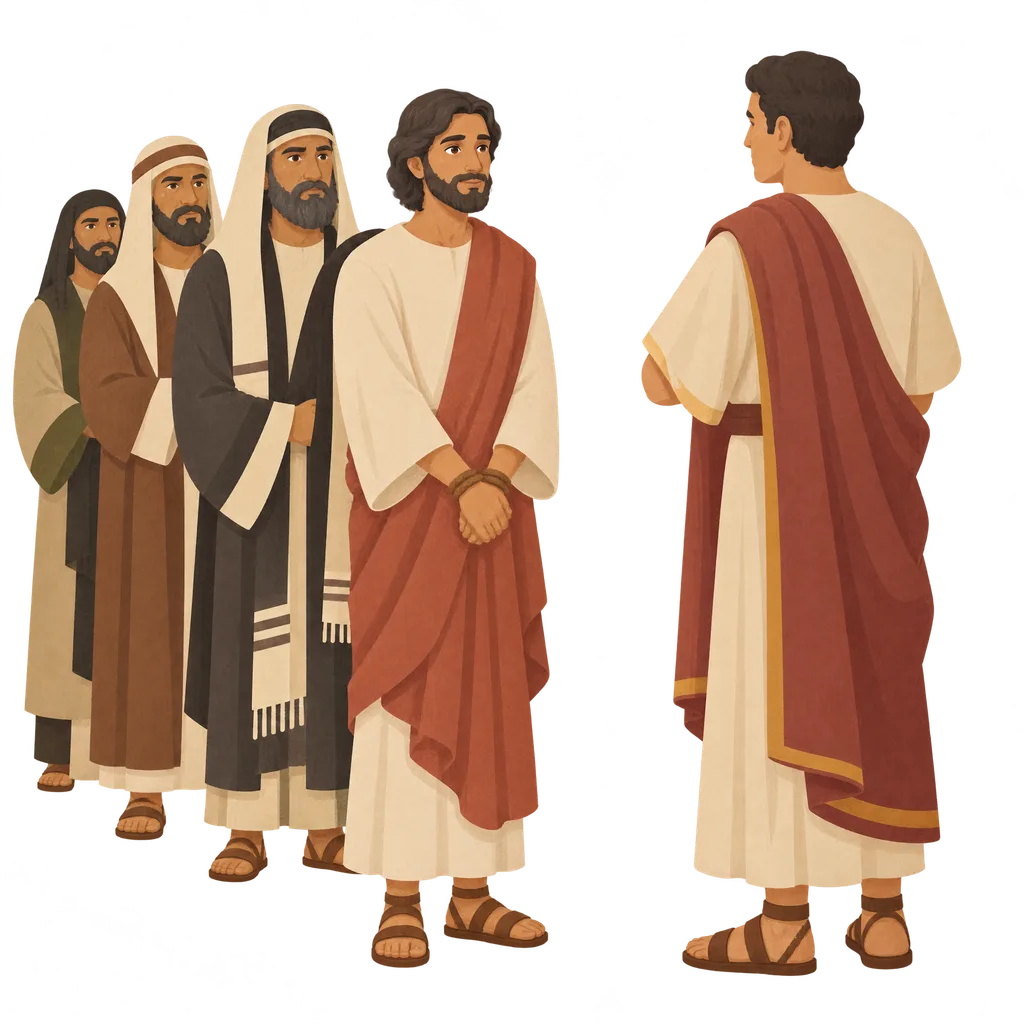
The chief priests and the elders give Jesus to Pilate. Pilate asks him a question, and the chief priests accuse him of many things. At the feast Pilate lets one man go, and there is a man called Barabbas. The chief priests stir up the multitude, and Pilate lets Barabbas go and gives Jesus up to be crucified.
10 words you will really use: they appear in the story and in the exercises, and come back for review in the next stories.
elder
an older person who is a leader in a group of people
noun
feast
a special day of celebration, often with a big meal
noun
evil
what is very bad; the opposite of good
noun
chief
most important; the ‘chief priests’ are the most important priests
adjective
hold
to keep in the hands; ‘held a meeting’ means had a meeting
verb
bind
to tie a person or a thing with a rope or a cord
verb
carry
to take a person or a thing from one place to another
verb
always
every time; at all times
adverb
commit
to do something that is wrong or against the law
verb
crucify
to put a person to death on a cross
verb
The moments of the story, in the order they happen.
The chief priests and the elders give Jesus to Pilate, and the chief priests accuse him of many things.
At the feast Pilate lets one man go. The multitude asks him to do it, and Barabbas is there.
Pilate asks the multitude about Jesus. The chief priests stir them up, and they cry out, “Crucify him!”
Pilate asks what evil Jesus has done. He lets Barabbas go, flogs Jesus and gives him up to be crucified.
The verse that closes the story, in the World English Bible. After 4 lessons, this is how you read it: the real text, with nothing simplified.
Mark 15:2 · WEB
Pilate asked him, “Are you the King of the Jews?” He answered, “So you say.”
One detail about the scene, with the work it comes from.
Who was Pilate? The Tyndale Open Study Notes on Mark 15:1 say that Pilate was the Roman governor of Judea.
Source: Tyndale Open Study Notes · CC BY-SA 4.0
First the whole story, in simple English with audio for every sentence. Then 4 short lessons, each with a piece of the story, a tip and exercises. At the end, the Bible verse and a little celebration.
Mark 15:1 to 15, in the World English Bible: Jesus before Pilate.
Mark 15:1 says that the chief priests, with the elders, scribes and the whole council, held a consultation, bound Jesus, carried him away and delivered him up to Pilate.
Pilate asks him, “Are you the King of the Jews?” and Jesus answers, “So you say.” (Mark 15:2).
Mark 15:7 says that there was one called Barabbas, bound with his fellow insurgents, men who in the insurrection had committed murder.
Mark 15:11 says that the chief priests stirred up the multitude, so that Pilate should release Barabbas to them instead.
Mark 15:15 says that Pilate, wishing to please the multitude, released Barabbas to them, and handed over Jesus, when he had flogged him, to be crucified.
Other questions:Do I need to know English?Does Biblup teach doctrine?
More stories from the New Testament course, in order.
Story 12Mark 15
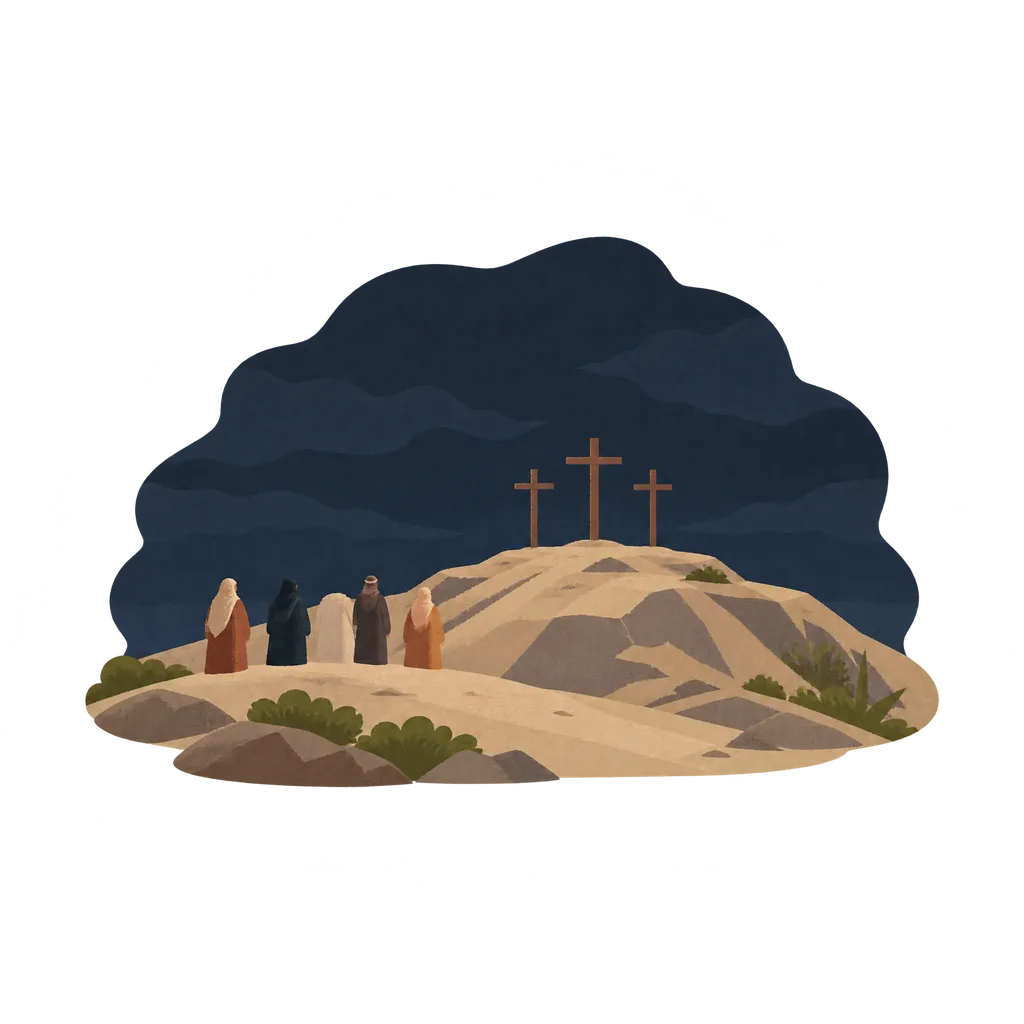
Jesus is brought to Golgotha, and the land goes dark: a story in English.
Story 13Mark 15–16
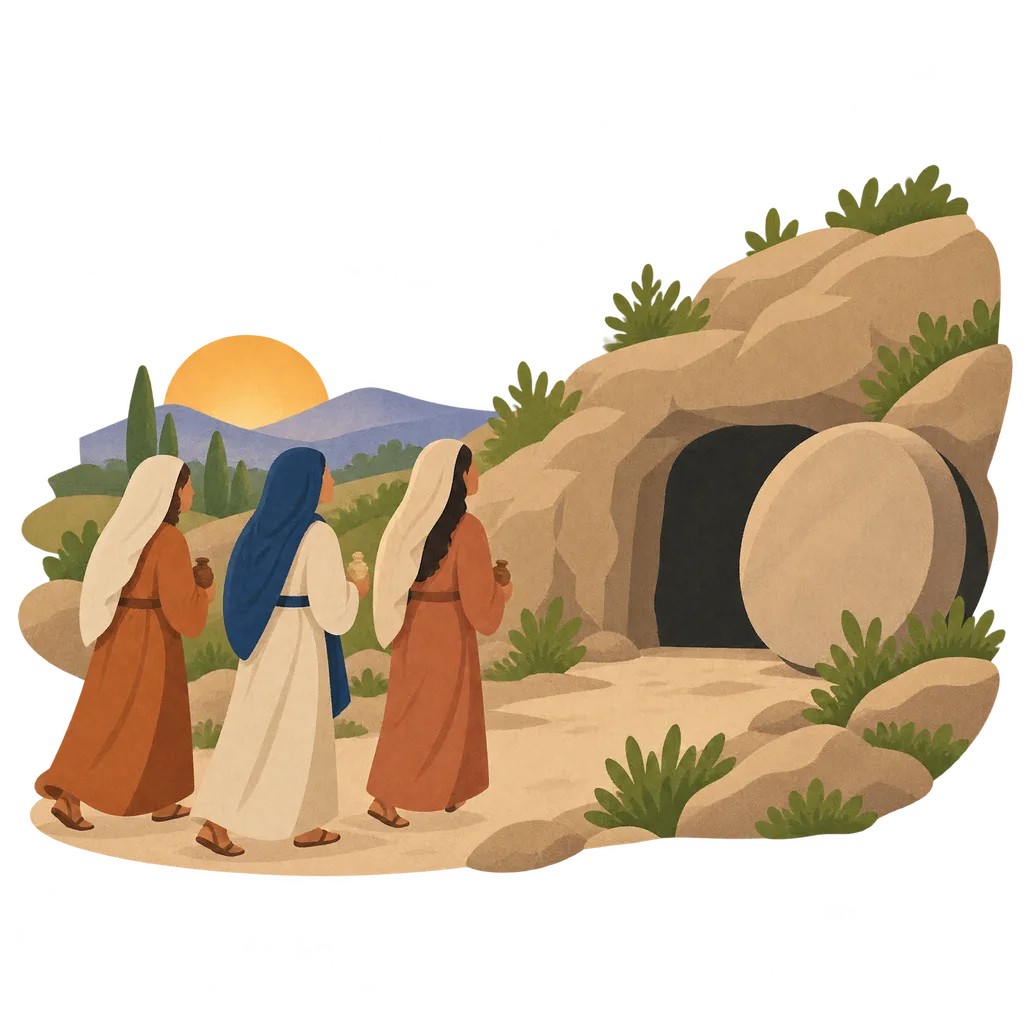
Three women go to a tomb very early in the morning: a story in English.

Psalm readingPsalms 69
A broken heart, no comforters and a drink of vinegar, read line by line.
20 sentences in simple English, with audio. The first lesson of the course needs no sign-up and no card.
Start this story