Old TestamentBeginner I · Story 1Genesis 1:1-31; Genesis 2:1-3

In the Beginning

Genesis 1:1 to 2:3 tells of six days of making, from the first light and the sky to dry land, plants, two great lights, living creatures and human beings, male and female, and of God resting on the seventh. Follow the story in short English sentences, then read the real verses at the end.

Start this storyStory + 3 lessons · ~24 min · free
Morning light over dark water and a strip of dry land

The words in this story

12 words you will really use: they appear in the story and in the exercises, and come back for review in the next stories.

  • light

    what lets you see; the opposite of dark

    noun

  • sky

    the space above the earth

    noun

  • land

    ground; a country or a region

    noun

  • day

    the time when it is light; also one in a count: day one, day two

    noun

  • man

    a grown-up male person; in this story, also men and women together

    noun

  • good

    not bad; nice

    adjective

  • say

    to speak words

    verb

  • make

    to build or create something

    verb

  • see

    to look with your eyes

    verb

  • be

    to exist or to have a quality (am, is, are, was, were)

    verb

  • come

    to move toward this place

    verb

  • go

    to move away from this place

    verb

What you'll discover

The moments of the story, in the order they happen.

  1. God says “Let there be light,” and there is light. Evening and morning make the first day.

  2. God makes the sky on day two. On day three the dry land appears out of the waters.

  3. On day four God makes two great lights: the greater for the day, the lesser for the night.

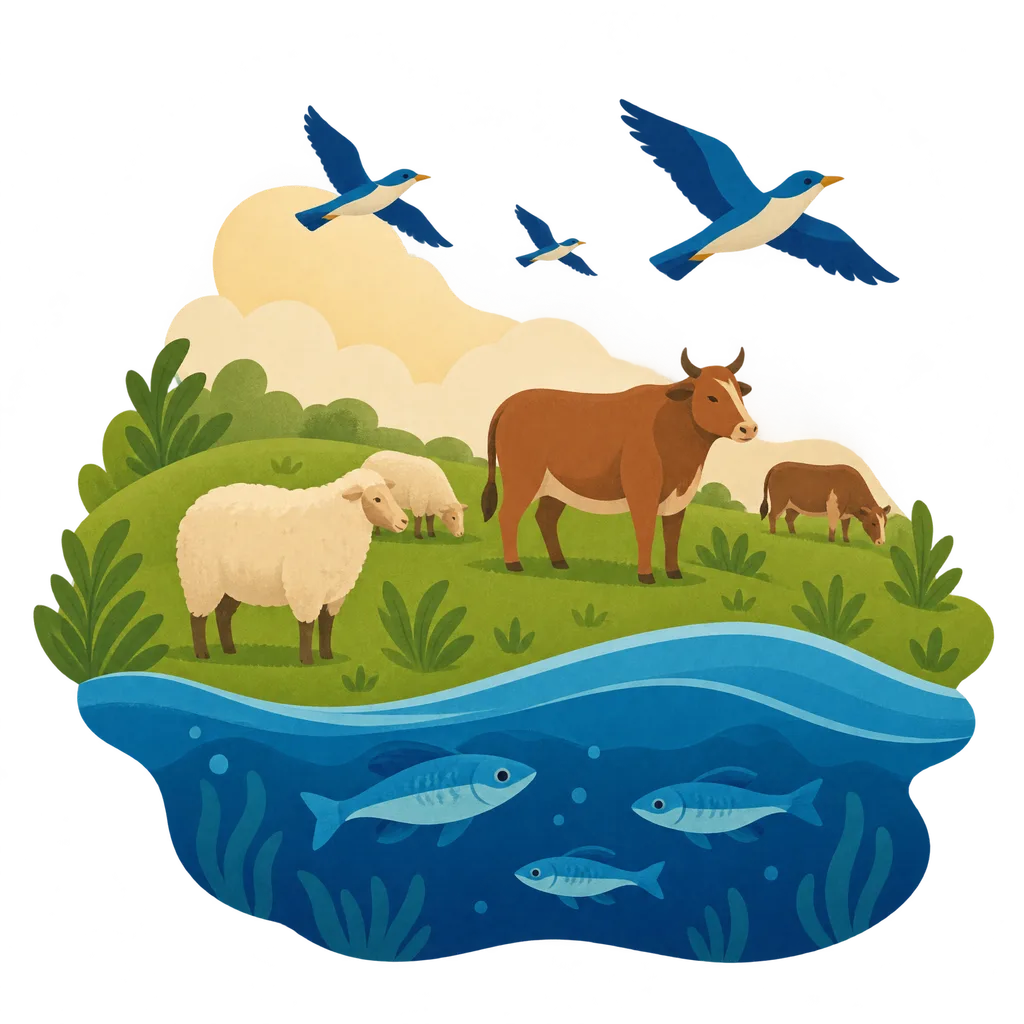
  4. On days five and six God fills the waters, the sky and the land with living creatures.

  5. God makes man in his own image and sees that everything is very good. On the seventh day he rests.

Original verse

The verse that closes the story, in the World English Bible. After 3 lessons, this is how you read it: the real text, with nothing simplified.

Genesis 1:3 · WEB

God said, “Let there be light,” and there was light.

God said, “Let there be light,” and there was light.

Credits

Context

One detail about the scene, with the work it comes from.

Where and when

When does the first day begin? Genesis 1:5 closes it with the words “There was evening and there was morning, the first day.” The Tyndale Open Study Notes say the Hebrew day began at sundown, just as the first day began with darkness and brought the first morning light.

Source: World English Bible · Public domain; Tyndale Open Study Notes · CC BY-SA 4.0
What a story looks like

First the whole story, in simple English with audio for every sentence. Then 3 short lessons, each with a piece of the story, a tip and exercises. At the end, the Bible verse and a little celebration.

  • The story · 19 sentences, with the meaning of each word on tap, 3 quick questions about the story
  • 3 lessons · a piece of the story, a tip and exercises in each one
  • The original verse · the Bible text, unadapted, then the next story

Questions about this story

Which Bible passage is this story from?

Genesis 1:1 to 2:3, in the World English Bible.

What does God say first?

God says, “Let there be light,” and there is light (Genesis 1:3).

What does God call the light and the darkness?

God calls the light “day” and the darkness “night” (Genesis 1:5).

What does God make on day four?

Two great lights: the greater light to rule the day and the lesser light to rule the night. He also makes the stars (Genesis 1:14 to 19).

What does God see at the end of the sixth day?

God sees everything that he has made, and it is very good (Genesis 1:31).

What happens on the seventh day?

God finishes his work and rests. He blesses the seventh day and makes it holy (Genesis 2:2 and 2:3).

Other questions:Do I need to know English?Does Biblup teach doctrine?

Start this story

19 sentences in simple English, with audio. The first lesson of the course needs no sign-up and no card.

Start this story
Only the necessary cookies, for now. Essential cookies are always on. Analytics is opt-in — you decide. Details