New TestamentBeginner I · Story 12Luke 15:1-7

A Hundred Sheep

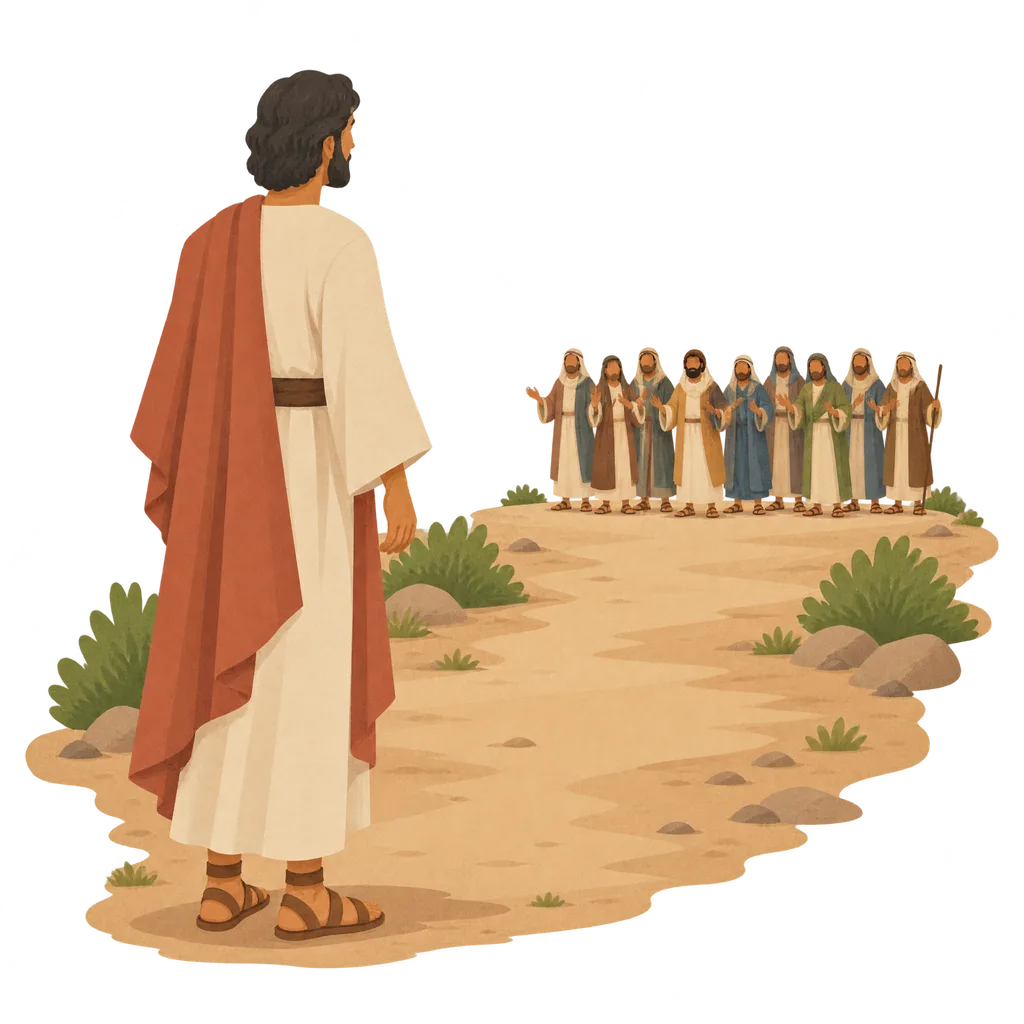
Tax collectors and sinners come near Jesus to hear him, and the Pharisees and the scribes complain that he welcomes sinners and eats with them. Jesus tells a story about a man who has one hundred sheep, loses one and goes after it. Read the story in simple English, with the real verses at the end.

Start this storyStory + 4 lessons · ~40 min · free
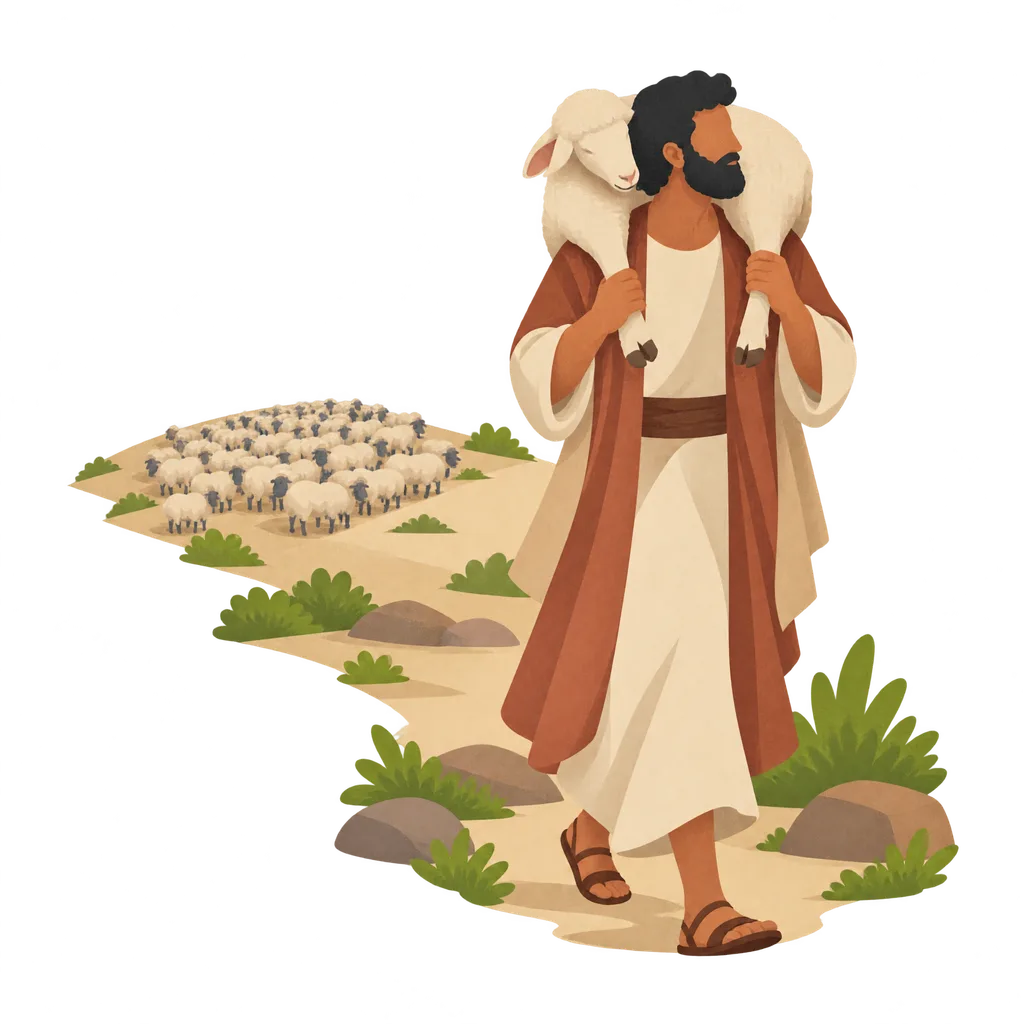
A man carrying one sheep on his shoulders, with a flock of sheep far behind him

The words in this story

11 words you will really use: they appear in the story and in the exercises, and come back for review in the next stories.

  • sheep

    an animal with wool

    noun

  • stand

    to be on your feet (stood: was on your feet)

    verb

  • lose

    to not know where something is any more (lost: the past form; also not found, as in the sheep that was lost)

    verb

  • would

    asks what you will do if this happens (wouldn’t: would not)

    verb

  • after

    later than; following (go after the one: follow it to find it)

    preposition

  • until

    up to the time when

    conjunction

  • set

    to put in a place

    verb

  • become

    to start to be

    verb

  • together

    with each other, in one place or at one time (call together: ask people to come to one place)

    adverb

  • over

    above or across something; also about or because of someone (joy over him: joy because of him)

    preposition

  • than

    a word used to compare two things

    conjunction

What you'll discover

The moments of the story, in the order they happen.

  1. Tax collectors and sinners come close to hear Jesus, and the Pharisees and the scribes murmur against him.

  2. Jesus tells a parable about a man with one hundred sheep who loses one and goes after it.

  3. He carries the sheep on his shoulders, rejoicing, and calls his friends and neighbors to rejoice with him.

  4. Jesus says there will be more joy in heaven over one sinner who repents than over ninety-nine righteous people.

Original verse

The verse that closes the story, in the World English Bible. After 4 lessons, this is how you read it: the real text, with nothing simplified.

Luke 15:4 · WEB

“Which of you men, if you had one hundred sheep and lost one of them, wouldn’t leave the ninety-nine in the wilderness and go after the one that was lost, until he found it?

Context

One detail about the scene, with the work it comes from.

The language of the text

How did the Pharisees use the word ‘sinners’? The unfoldingWord Translation Words entry on sin says that religious people like the Pharisees sometimes used it for people who did not keep the law as well as the Pharisees thought they should.

Source: Translation Words (en_tw) · CC BY-SA 4.0
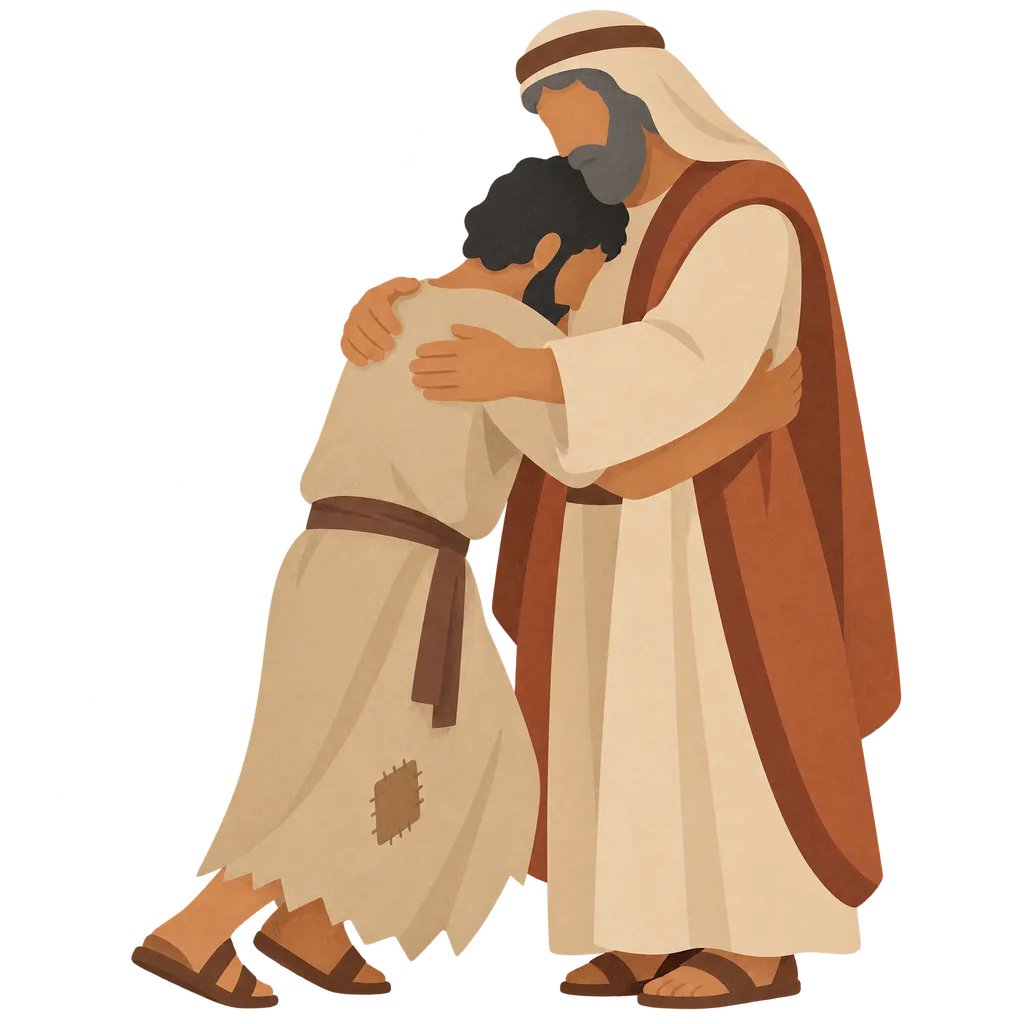
What a story looks like

First the whole story, in simple English with audio for every sentence. Then 4 short lessons, each with a piece of the story, a tip and exercises. At the end, the Bible verse and a little celebration.

  • The story · 20 sentences, with the meaning of each word on tap, 3 quick questions about the story
  • 4 lessons · a piece of the story, a tip and exercises in each one
  • The original verse · the Bible text, unadapted, then the next story

Questions about this story

Which passage does this story retell?

Luke 15:1-7, from the World English Bible: Jesus and the parable of the lost sheep.

Who complains in this story?

The Pharisees and the scribes murmur that Jesus welcomes sinners and eats with them (Luke 15:2).

What does the man do when he loses one sheep?

He leaves the ninety-nine and goes after the one that was lost, until he finds it (Luke 15:4).

What does the man do when he finds the sheep?

He carries it on his shoulders, rejoicing, and calls together his friends and his neighbors (Luke 15:5-6).

What does Jesus say at the end?

He says that there will be more joy in heaven over one sinner who repents than over ninety-nine righteous people who need no repentance (Luke 15:7).

Other questions:Do I need to know English?Does Biblup teach doctrine?

Start this story

20 sentences in simple English, with audio. The first lesson of the course needs no sign-up and no card.

Start this story
Only the necessary cookies, for now. Essential cookies are always on. Analytics is opt-in — you decide. Details