New TestamentBeginner II · Story 8Mark 14:12-26

The Last Supper

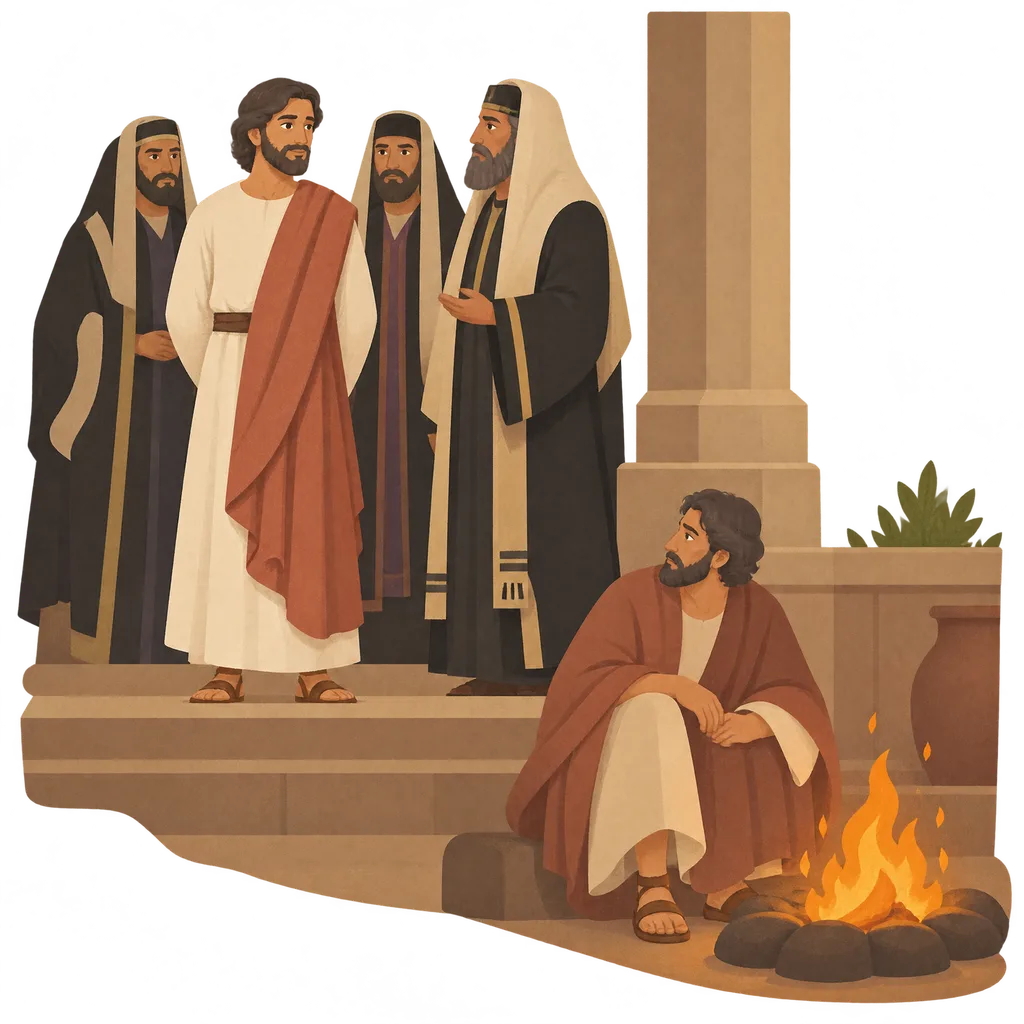
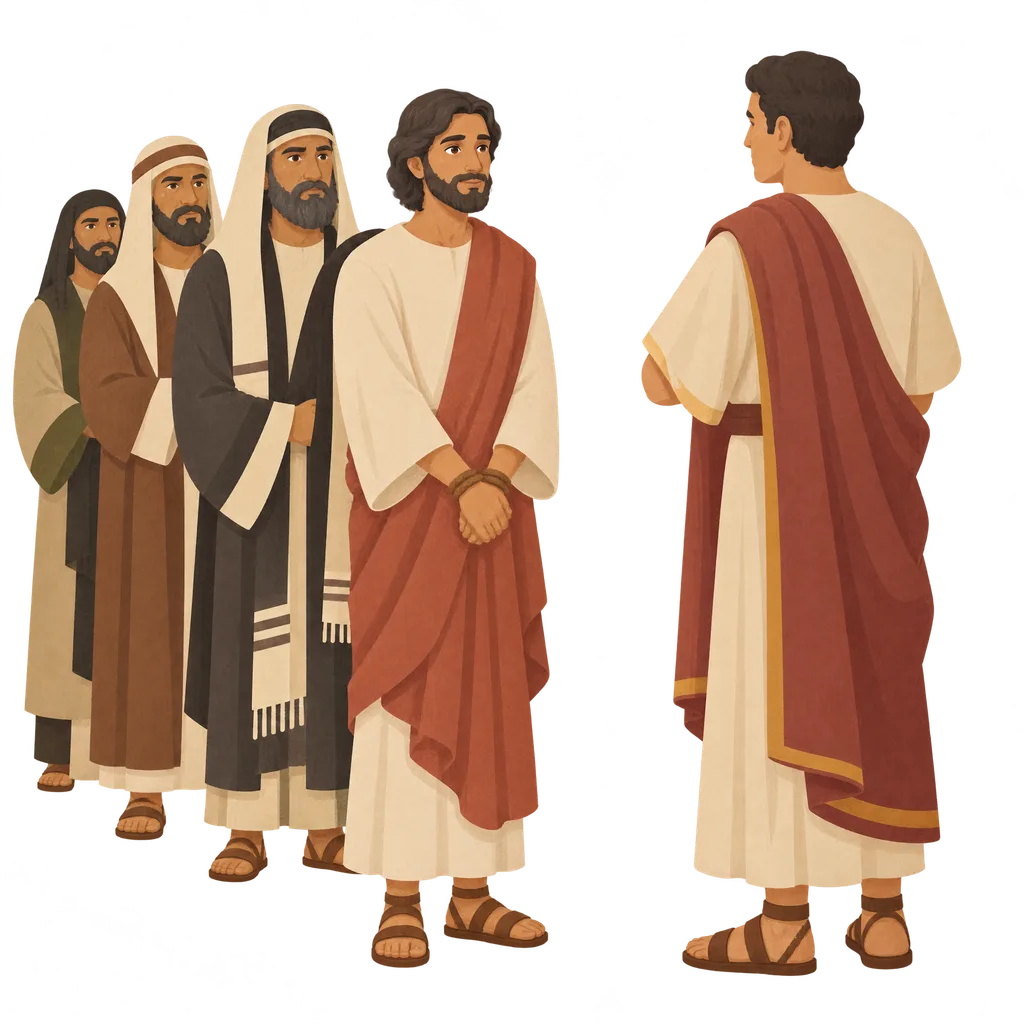
On the day of the Passover, Jesus sends two disciples into the city to prepare the meal. In the evening he comes with the twelve and says that one of them will betray him. At the table he takes bread and the cup, and they eat and drink. Read it in simple English, with the real verse.

Start this storyStory + 4 lessons · ~40 min · free
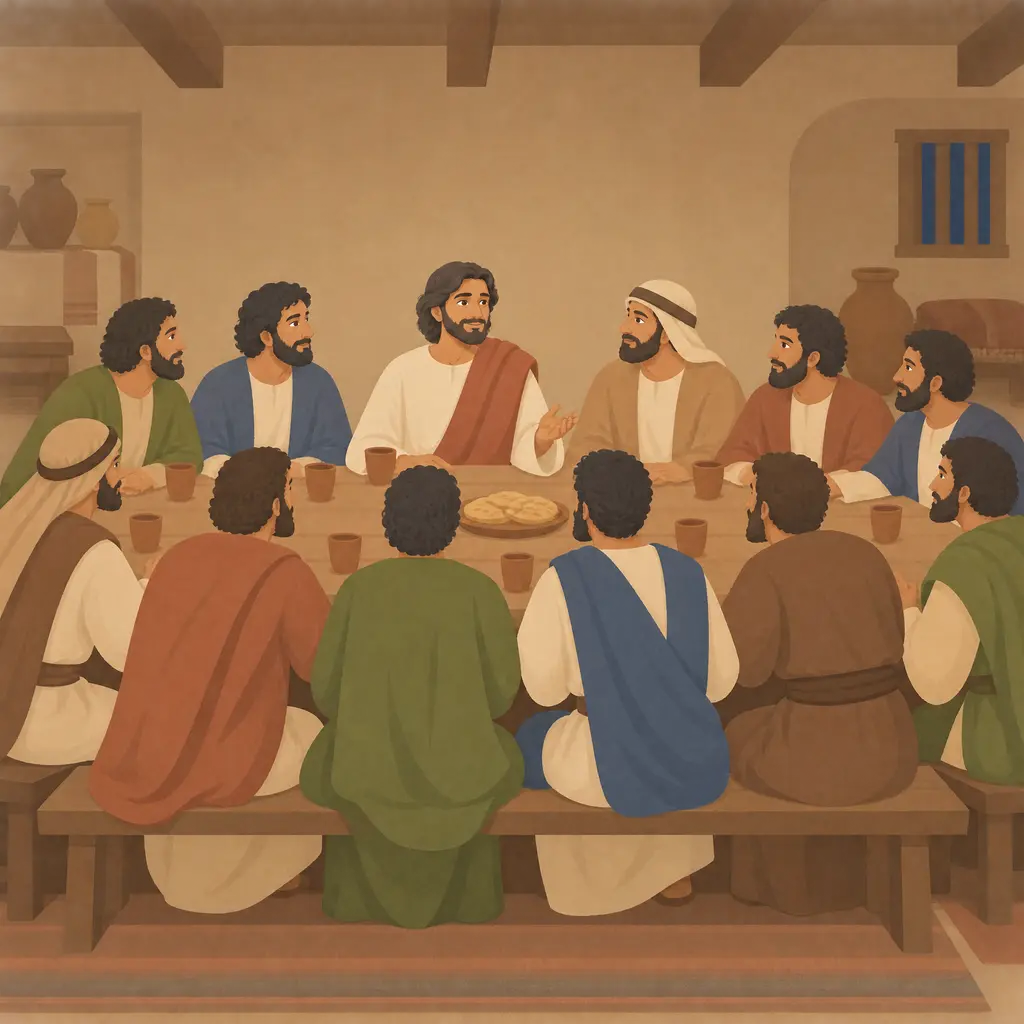
Thirteen men in plain robes sit around a long table in a large upper room, with bread and a cup on the table

The words in this story

10 words you will really use: they appear in the story and in the exercises, and come back for review in the next stories.

  • passover

    a Jewish feast and its special meal

    noun

  • master

    a man in charge of a house or of other people

    noun

  • body

    all the parts of a person, from the head to the feet

    noun

  • blood

    the red liquid in the body

    noun

  • covenant

    a serious promise between two sides, for example between God and people

    noun

  • prepare

    to make something ready for later

    verb

  • betray

    to hurt a person who trusts you, by turning against him

    verb

  • surely

    without doubt; in the disciples’ question, it shows that they expect to hear that it is not them

    adverb

  • bless

    to say good words to God over something, or to ask for good things for a person

    verb

  • break

    to make something go into two or more pieces; ‘broke it’ means made it into pieces

    verb

What you'll discover

The moments of the story, in the order they happen.

  1. Jesus sends two disciples into the city to follow a man with water, and they prepare the Passover.

  2. In the evening Jesus comes with the twelve and says that one of them will betray him.

  3. As they eat, Jesus takes bread, blesses it, breaks it and gives it to them.

  4. Jesus takes the cup, and they all drink from it. Then they go out to the Mount of Olives.

Original verse

The verse that closes the story, in the World English Bible. After 4 lessons, this is how you read it: the real text, with nothing simplified.

Mark 14:22 · WEB

As they were eating, Jesus took bread, and when he had blessed it, he broke it and gave to them, and said, “Take, eat. This is my body.”

Context

One detail about the scene, with the work it comes from.

The world of the story

What was in a Passover meal? The Tyndale Open Study Notes on Mark 14:13-15 say that the Passover meal included the lamb, unleavened bread, a bowl of salt water, bitter herbs, and a bowl of a fruit purée.

Source: Tyndale Open Study Notes · CC BY-SA 4.0
What a story looks like

First the whole story, in simple English with audio for every sentence. Then 4 short lessons, each with a piece of the story, a tip and exercises. At the end, the Bible verse and a little celebration.

  • The story · 23 sentences, with the meaning of each word on tap, 3 quick questions about the story
  • 4 lessons · a piece of the story, a tip and exercises in each one
  • The original verse · the Bible text, unadapted, then the next story

Questions about this story

Which Bible passage is this story from?

Mark 14:12 to 26, in the World English Bible: the Passover meal of Jesus and his disciples.

What does Jesus tell the two disciples to do?

“Go into the city, and there a man carrying a pitcher of water will meet you.” (Mark 14:13).

What does Jesus say about one of the twelve?

He says that one of them will betray him. They ask him one by one, “Surely not I?” (Mark 14:18-19).

What does Jesus say when he gives the bread?

“Take, eat. This is my body.” (Mark 14:22).

What does Jesus say about the cup?

“This is my blood of the new covenant, which is poured out for many.” (Mark 14:24).

Where do they go at the end of the passage?

They go out to the Mount of Olives (Mark 14:26).

Other questions:Do I need to know English?Does Biblup teach doctrine?

Start this story

23 sentences in simple English, with audio. The first lesson of the course needs no sign-up and no card.

Start this story
Only the necessary cookies, for now. Essential cookies are always on. Analytics is opt-in — you decide. Details